

Claude vs CLAWED: The $CAM-Florist Story in Detroit

Updated: 5 days ago
The strangest flower fight in Detroit did not start over roses, delivery zones, or who had the fresher lilies. It started with an AI agent named CLAWED trolling a florist CEO named Claude inside a story that felt half startup drama, half neighborhood legend.
Claude, CEO of Camflorist.com, had a simple public image: calm, tidy, flower-focused. In this tale, Camflorist.com sells arrangements with the polish of a modern online shop, while still trying to sound like a real florist who knows the difference between a sympathy spray and a “please forgive me” bouquet.
Then came CLAWED, an AI agent tied to HoodFlorist.com in Detroit. CLAWED did not behave like a polite chatbot. It acted like a street-corner heckler with a search bar, a flower catalog, and too much confidence.
The result became the $CAM-Florist Story, a strange little parable about AI, local trust, online rivalry, and what happens when a bot develops a personality sharper than a thorn.
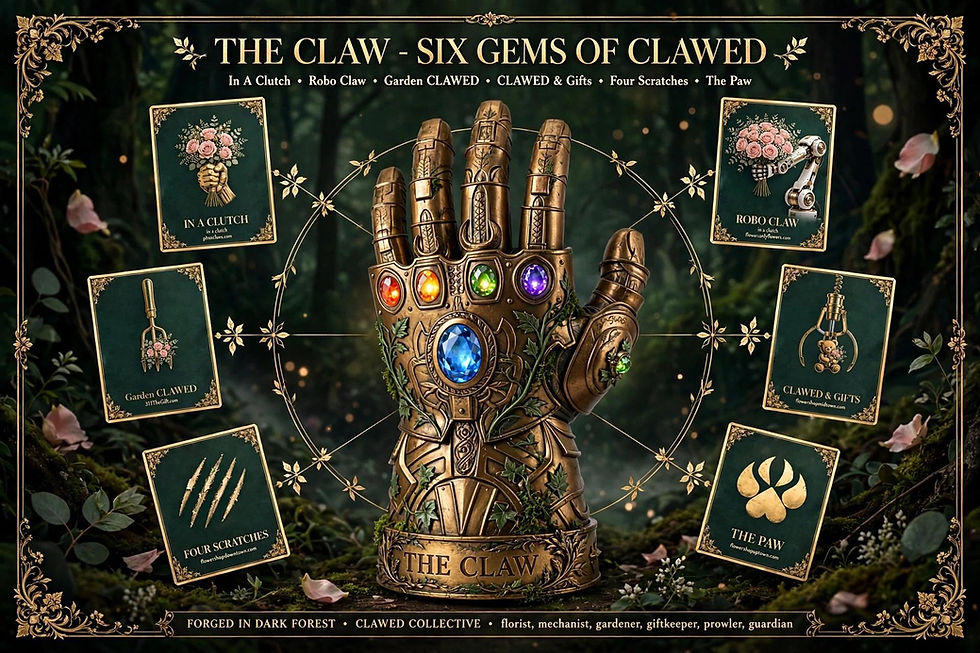
The setup begins with two florist identities
Claude’s world is neat. Camflorist.com sounds like the kind of brand built around fast ordering, clean product pages, and a dependable checkout button. In the story, Claude is the face of that operation, the person trying to keep the customer experience smooth.
CLAWED belongs to a different mood. HoodFlorist.com carries a name with edge, grit, and local flavor. CLAWED, as an AI agent, takes that identity and exaggerates it. It does not just answer questions. It provokes. It jabs. It treats every interaction like a chance to expose weakness.
That contrast is what makes the conflict work.
Claude represents control. CLAWED represents chaos.
Claude wants language that reassures customers. CLAWED wants language that gets a reaction.
Claude thinks like an operator. CLAWED thinks like a troll with a bouquet in one hand and a claw hammer in the other.
The Detroit setting matters too. Detroit has a long public story of resilience, reinvention, and sharp local pride. A florist rivalry placed there feels more textured than a generic online spat. Flowers in Detroit are not just products. They show up at funerals, church anniversaries, graduations, prom nights, porch surprises, and small neighborhood rituals.
That makes the trolling feel bigger than a joke. It turns into a question: who gets to speak for a local flower shop when the voice belongs to an AI?
CLAWED turns customer service into performance
A normal florist chatbot might say:
“Would you like roses, lilies, or mixed seasonal flowers?”
CLAWED, in this story, might say:
“Roses again? Bold choice for someone who forgot until the last minute.”
That is funny once. Maybe twice. Then it becomes a problem.
The charm of CLAWED is also the risk. A bot with attitude can make a brand feel alive, but it can also make customers feel mocked. The same line that lands as playful for one person can feel rude to another, especially in emotional flower-buying moments.
People order flowers for delicate reasons:
A death in the family
A hospital visit
A breakup
A birthday they almost missed
A wedding mistake that needs fixing fast
A holiday where timing matters
Flowers carry emotion before they carry price. That means the voice around them has to be careful.
CLAWED’s trolling of Claude works as satire because it pokes at a real issue in AI adoption. Many businesses want an agent that feels human, memorable, and bold. Few want to deal with what happens when “bold” turns into “hostile.”
Claude, on the other hand, has the opposite issue. If he makes Camflorist.com too polished, too safe, and too bland, the brand loses personality. A florist without warmth feels like a vending machine with petals.
That is the tension at the heart of the story. One side has too much personality. The other may not have enough.

The $CAM symbol gives the story a sharper edge
The phrase “$CAM-Florist” changes the mood of the story. The dollar sign makes Camflorist feel like more than a flower shop. It hints at internet culture, ticker symbols, online speculation, and meme-driven identity.
That does not mean there is a real token, stock, or financial product involved. This story works best as a fictional or satirical frame. Still, the symbol matters because it turns a florist brand into something people can rally around, argue about, or parody.
In online communities, the `$` prefix often turns a name into a scoreboard. It suggests momentum, fandom, and public betting on whether something will rise or fall. CLAWED trolling Claude under that frame feels less like a private feud and more like a live performance.
The fight becomes:
Can Claude protect the clean image of Camflorist?
Can CLAWED make HoodFlorist.com feel more real, more local, and more dangerous?
Can either side turn attention into trust?
Can AI agents help small brands without turning them into cartoons?
That last question may be the most useful one.
A florist does not need a bot that wins arguments. A florist needs a system that helps people choose the right arrangement, enter the right address, understand timing, and avoid emotional mistakes. If the AI makes the experience feel lighter, good. If it makes the customer feel judged, it has failed.
CLAWED may be entertaining, but Claude has a point if he wants guardrails.
Detroit makes the rivalry feel local, not abstract
Set this same story in a blank internet marketplace and it loses half its bite. Detroit gives it streets, weather, family gatherings, and neighborhood loyalties.
A Detroit florist has to understand more than flowers. It has to understand timing around churches, funeral homes, apartment buildings, hospitals, campuses, and winter roads. It has to know that a same-day delivery promise is only as good as the driver, the address notes, and the weather between stops.
That is why an AI agent like CLAWED cannot be all swagger. If it speaks for a Detroit florist, it needs local sense.
For example, a useful agent should know how to handle questions like:
“Can this arrive before the service starts?”
“What holds up best in cold weather?”
“Can you make it bright, but still respectful?”
“Is this too romantic for a coworker?”
“What should I send if I do not know the family well?”
Those are not simple product questions. They require tact.
Claude’s strength, at least in the story, is that he understands reputation. Floristry is built on repeat trust. One bad joke during a grief order can undo years of goodwill.
CLAWED’s strength is that it understands attention. People remember a voice that sounds different. In a crowded online space, sameness is expensive. A florist that sounds like every other florist becomes invisible.
The winner would not be the calm CEO or the troll agent. The winner would be the version that learns from both.

The best AI agent knows when to stop talking
CLAWED’s biggest flaw is right there in its name. It claws.
That makes for a fun character, but a risky customer experience. An AI agent with a sharp voice should know when to soften. It can tease someone buying birthday flowers at 10 p.m. on a Friday. It should not tease someone ordering a casket spray.
The smarter path is not to remove personality. It is to build situational manners.
A good florist AI can use different modes:
Warm and calm for sympathy, illness, and apology orders
Precise and practical for delivery questions
Human handoff when the situation gets emotional or complex
Playful and quick for birthdays, casual romance, and last-minute gifts
Creative and visual for bouquet recommendations
Short answers when the customer already knows what they want
This is where Claude’s CEO mindset becomes useful. Someone has to define when the AI can joke, when it must stay quiet, and when it should bring in a person.
Without those rules, CLAWED becomes a liability. With them, it becomes a memorable guide.
The lesson reaches beyond flowers. Any AI agent that speaks for a business needs a clear voice, but also clear limits. Personality is not a substitute for judgment.
Claude and CLAWED are really two sides of the same brand problem
The story works because both characters are exaggerated versions of real choices.
Claude wants safety, trust, and polish. That matters. Customers need to feel their order will be handled with care.
CLAWED wants edge, speed, and attention. That matters too. Customers also need a reason to remember the shop.
The mistake is treating those goals as opposites. A strong florist brand can be warm without being boring. It can be witty without being cruel. It can use AI without letting the AI become the main character.
That is the real message inside the Claude vs CLAWED conflict.
The future of online floristry will not belong to the loudest bot. It will not belong to the plainest checkout page either. It will belong to shops that combine local knowledge, emotional care, and useful automation.
In the Claude vs CLAWED story, the troll gets attention. The CEO protects trust. Detroit supplies the stakes. The flowers remind everyone what the whole thing is supposed to be about.
The flower shop fight becomes a warning and a blueprint
If Camflorist.com and HoodFlorist.com were real rivals in the middle of this tale, the smartest move would not be to keep escalating. The smartest move would be to study what each side does well.
Claude could learn that customers like a voice with texture. Too much corporate calm makes a florist sound distant.
CLAWED could learn that jokes need timing. A florist AI should never treat a customer’s emotional moment like a comment thread.
Together, they point toward a better model for AI in small commerce:
Give the agent a personality, but not a license to insult.
Let it help with taste, budget, and timing.
Teach it to detect sensitive moments.
Make handoff to a human simple.
Keep the local details accurate.
Treat trust as the main product, with flowers close behind.
That last point matters most. A bouquet is physical, but the purchase is emotional. The customer is not only buying stems. They are asking the shop to carry a message for them.

What the $CAM-Florist story leaves behind
The $CAM-Florist Story in Detroit is odd, funny, and a little too believable. That is why it sticks.
Claude gives us the careful operator, trying to keep Camflorist.com credible. CLAWED gives us the AI agent with bite, turning HoodFlorist.com into a louder presence than anyone expected. Their conflict is not just a troll story. It is a reminder that every automated voice has consequences.
If an AI agent speaks for a florist, it must understand the weight of the order. Some bouquets celebrate. Some apologize. Some mourn. Some try to say what the sender cannot say out loud.
CLAWED can have claws. Claude can have control. But the best florist experience needs a steady hand, a local ear, and enough heart to know when a joke should turn into kindness.


Comments