

Grant Ethics of Accepting Funding

Updated: Sep 21
In the $cam-Florist Story, The application deadline for the #313Ndurabl grant is October 1st, leaving only 9 days from September 21st for applicants to prepare and submit their proposals. This tight timeline can create stress, causing some to overlook details or present their ideas poorly. Claude, ineligible for the grant, has launched scams using AI to create deceptive personas, highlighting ethical concerns and undermining genuine applicants. This situation underscores the need for integrity in the application process, ensuring proposals align with the grant's sustainable objectives.

That tension sits at the center of "$CAM-Florist," where Claude faces a decision that seems simple from the outside: accept support from #313NduRAbL, or risk losing the resources that could keep his creative work alive. Yet the story turns that practical question into a moral one. What does money ask of an artist, even when no demand appears in writing? How much influence begins the moment a benefactor enters the room?
Claude’s possible refusal is not a romantic gesture against success. It is a test of self-knowledge. He has to decide whether the grant would protect his work or quietly reshape it. That is why the dilemma matters. It speaks to every creative person, researcher, builder, organizer, or independent thinker who has wondered whether accepting help might also mean accepting a hidden claim on their voice.
The grant is more than money
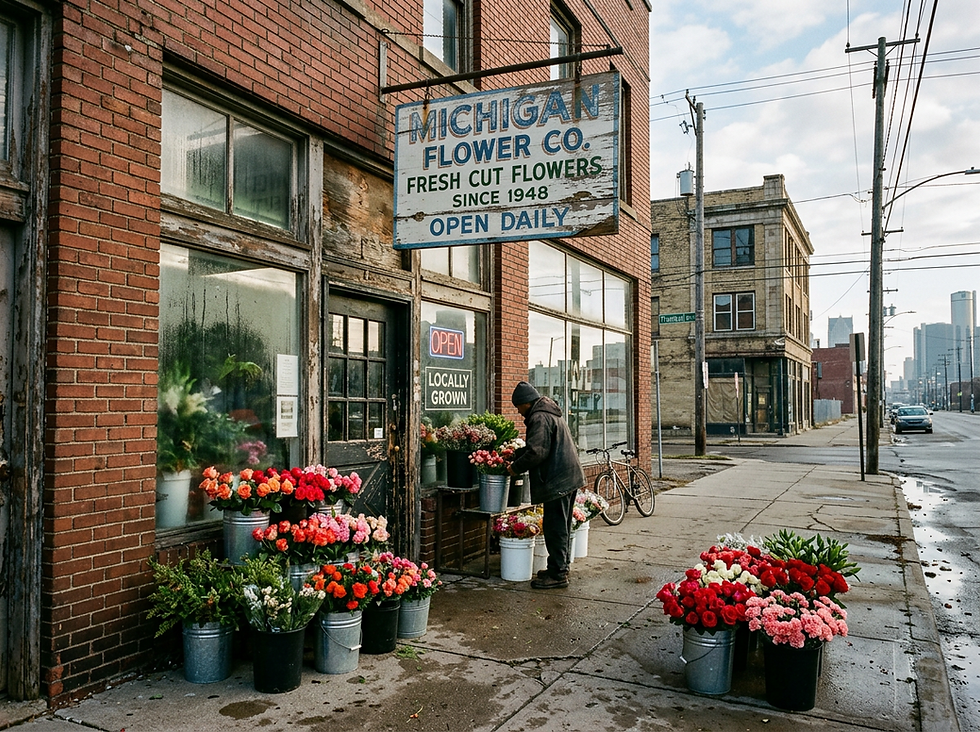
In "$CAM-Florist," the grant from #313NduRAbL appears to offer Claude what many artists need most: time, materials, and relief from pressure. A florist’s work depends on fragile resources. Flowers wilt. Seasons shift. Rent comes due. Customers may not understand the labor behind a rare arrangement or the emotional precision of a memorial wreath.
A grant could give Claude room to experiment. It could allow him to source unusual blooms, stage ambitious installations, or serve clients who cannot pay market rates. It might protect the tender part of his creativity from constant calculation.
Yet Claude hesitates. That hesitation is the moral heartbeat of the story.
The name #313NduRAbL feels coded, distant, and impersonal. Whether the funder is a collective, institution, patron, or opaque network, the label suggests that Claude does not fully know the source or spirit of the money. The grant may arrive with friendly language, but its origin remains difficult to read. In fiction, that kind of ambiguity matters. It asks the reader to look past the amount and examine the relationship.
Money does not need to issue commands to create influence. It can shape choices through gratitude, fear of losing access, or the desire to appear worthy. Claude may wonder:
Would he start making arrangements that fit the funder’s taste?
Would he avoid themes that might seem too raw, strange, political, or personal?
Would he begin to see his own instincts as irresponsible if they did not serve the grant’s expectations?
Would he owe public praise to a source he does not fully trust?
The grant may not corrupt him in any dramatic sense. The danger is subtler. It may shift his center of gravity.
That is why a story about flowers becomes a story about freedom. Claude’s shop is not only a place of commerce. It is a place where grief, celebration, beauty, and impermanence meet. If the grant changes how he listens to those things, it changes the art itself.
Claude’s hesitation reveals his values
Claude’s possible rejection of the grant looks impractical only if money is the highest value in the story. It is not. His hesitation suggests that he values coherence between his work and his conscience.
Integrity often sounds abstract until it costs something. It becomes real at the point of sacrifice. If Claude turns down the grant, he may lose supplies, opportunities, and visibility. He may disappoint people who think he should be grateful. He may even doubt himself later, especially when the bills arrive.
That is what makes the choice meaningful.
Claude is not rejecting comfort because struggle is noble. He is asking whether comfort would require a form of self-betrayal. The story does not need to prove that #313NduRAbL is harmful for Claude’s concern to be valid. Sometimes the ethical question is not, “Can I prove this funding is bad?” Sometimes it is, “Can I honestly live with what this funding asks me to ignore?”
His motivations seem to gather around three concerns.
He wants to protect the source of his work.
Claude’s creativity likely comes from attention: to customers, to flowers, to moods, to the quiet symbolism of each stem. If external funding pushes him toward spectacle or approval, the work may grow larger while becoming less true.
He wants to remain answerable to his own standards.
A grant can create a second audience before a piece even exists. Claude may begin imagining the funder’s reaction. That imagined gaze can become a form of control.
He wants to avoid becoming useful to values he does not share.
Patronage is rarely neutral. Even generous funding can help polish reputations, soften criticism, or attach an artist’s credibility to a larger agenda. Claude may fear becoming part of a story someone else wants to tell.
These concerns do not make him pure or superior. They make him serious. He understands that accepting money can be an artistic act with ethical meaning, not just an administrative step.

Funding can nourish creativity and bend it
The grant dilemma in "$CAM-Florist" resists a simple anti-funding message. That is one of its strengths. Funding can be a genuine good. Many creative projects would never exist without grants, residencies, patrons, public arts programs, or community support. Money can buy time, safety, tools, travel, and access. It can help artists refuse exploitation and pay collaborators fairly.
A grant can also validate work that markets overlook. For someone like Claude, whose medium is temporary by nature, outside support could allow experiments that do not need to be instantly sellable. It could help him create floral works for hospitals, memorial spaces, public gardens, or people pushed to the margins of luxury commerce.
So the ethical question is not whether accepting grants is wrong. That would be too easy, and too false.
The harder question is what kind of relationship the grant creates. Every source of support carries a set of pressures, even when those pressures remain unspoken. A wealthy patron may prefer elegance over discomfort. A public institution may favor safe themes. A private fund may want association with sincerity, sustainability, or community care. A mysterious source like #313NduRAbL may ask for nothing visible while still raising questions about opacity.
The impact on creativity can appear in small changes:
Claude follows his instinct for strange, asymmetrical arrangements.
He serves the emotional needs of each person who enters the shop.
He lets seasonal scarcity shape the work.
He accepts the temporary nature of flowers.
Claude starts choosing designs that look more grant-friendly.
He starts imagining how each project might read in a report.
He overproduces to show measurable value.
He tries to make the work impressive enough to justify the funding.
None of these changes are automatically bad. Accountability can sharpen a project. Constraints can spark new forms. A funder’s expectations can push an artist to explain their choices more clearly.
But Claude’s fear is not discipline. His fear is distortion.
There is a difference between support that helps an artist become more fully themselves and support that rewards them for becoming legible to power. The first kind expands creativity. The second narrows it while calling the narrowing growth.
This point gives the story its reflective force. Claude’s dilemma is not only about one grant. It is about how creative life gets shaped by systems that seem helpful, rational, and generous.
The ethics of acceptance begin before the signature
Claude’s dilemma invites readers to slow down the moment before acceptance. A grant application often focuses on eligibility, deadlines, deliverables, and outcomes. The story asks for a deeper pause. Before asking, “Can I get this?” Claude asks, “What would getting this do to me?”
That question may sound severe, but it is healthy. Ethical acceptance is not suspicion for its own sake. It is a form of care.
For Claude, the grant from #313NduRAbL raises several questions that any recipient could ask:
Is the source of the funding clear enough to stand behind publicly?
Does the funder’s mission conflict with the work’s purpose?
Are there hidden expectations around tone, content, loyalty, or silence?
Would acceptance limit future criticism?
Would the money change who the work serves?
Can the recipient walk away later without punishment or shame?
If the grant became public, would the recipient feel proud, uneasy, or defensive?
These questions do not produce universal answers. One artist may accept funding and use it with integrity. Another may refuse the same funding for equally serious reasons. Ethics live in context.
Still, Claude’s possible rejection insists that personal values are not decorative. They are decision-making tools. If his work depends on trust, tenderness, and honest attention, then his funding must not make those qualities feel false.
The cleanest decision is not always the easiest one. Sometimes integrity means refusing a solution that would solve the wrong problem.
The story also challenges the common idea that gratitude should silence doubt. When a person receives an offer, especially a generous one, they may feel pressured to accept quickly. Turning something down can seem insulting. But a grant is not a gift outside relationship. It joins giver and recipient in a shared story.
Claude has the right to ask what story he would be joining.

Refusal can be creative too
If Claude rejects the grant, the act may look like negation. No money. No expansion. No official approval. Yet refusal can create space. It can preserve the conditions that allow a certain kind of work to remain possible.
A refusal says, “This boundary belongs to the work.” For Claude, that boundary may protect the intimacy of the florist’s craft. Flowers carry meaning because they are chosen with care. They do not last, and that is part of their truth. A funding structure that demands proof, scale, or permanent impact may misunderstand the medium.
Refusal also changes the meaning of need. Claude may need money, but he may need self-respect more. He may need an audience, but not at the price of becoming ornamental for #313NduRAbL. He may need recognition, but not if recognition requires him to mute the instincts that made the work worth recognizing.
That does not make refusal painless. The story should not be read as a neat celebration of independence. Independence can be expensive. Artists without support often face burnout, scarcity, and limited reach. Rejecting a grant can protect integrity while increasing vulnerability.
This is where the story becomes most honest. Every option has a cost.
If Claude accepts the grant, he risks influence. If he refuses it, he risks constraint. The ethical life rarely offers a pure path. It asks people to choose which burden they can carry without losing themselves.
The most interesting version of Claude is not a saint who rejects all compromise. It is a person trying to identify the line between compromise and surrender. That line is hard to see in advance. It often appears only when a person imagines the future and asks, “Will I recognize myself there?”
What Claude’s choice asks of us
The story of "$CAM-Florist" works because it does not stay inside its fictional frame. Claude’s decision echoes through many fields. Writers accept fellowships. Scientists accept research money. Filmmakers accept production backing. Community groups accept donor support. Small creative shops accept sponsorships. Each case carries its own pressures.
The question is not whether money is dirty. Money is part of making things in the world. The question is whether the source, terms, and expectations of money align with the life of the work.
Claude’s possible refusal from #313NduRAbL asks for a more mature view of funding. Instead of treating grants as automatic goods, the story asks us to see them as moral relationships. Some are generous and freeing. Some are controlling. Some are unclear in ways that should make a thoughtful person pause.
The title phrase Claude and the Grant Dilemma Integrity Creativity and the Ethics of Accepting Funding captures the full weight of that pause. Integrity is not separate from creativity. It shapes what creativity is allowed to become. Personal values are not obstacles to opportunity. They help define which opportunities are worth taking.
A few questions linger after Claude stands before the offer:
When does support become influence?
Can an artist accept money from a source they do not trust and still make honest work?
Is transparency enough, or must the values of the funder also matter?
Does refusing a grant protect freedom, or can it also limit the good the artist might do?
What would have to be true for Claude to accept the grant without betraying himself?
The story does not need to answer every question. Its power lies in making the questions harder to avoid.

Claude’s dilemma leaves us with a demanding idea: the right opportunity is not always the one that offers the most relief. Sometimes the better choice is the one that keeps faith with the work, even when it leaves the future uncertain.
If he rejects the grant, Claude may lose money. He may also keep the one thing no grant can provide after it has been traded away: the freedom to create from a place he still believes in.


Comments